
Sales Pipeline Tracking for Singapore Real Estate Agents

What is sales pipeline tracking and why does it matter for Singapore agents?
Sales pipeline tracking is the systematic monitoring of every sales opportunity as it moves through defined stages, from first prospect contact to signed contract. For real estate professionals in Singapore, this discipline is the difference between a productive quarter and a pipeline full of deals that never close.
The local context adds real complexity. Singapore’s property market requires agents to navigate CEA registration, ABSD checks, and HDB eligibility verification before any deal can close legally. Without a structured pipeline that incorporates these compliance stages, even well-qualified buyers can stall at the finish line. Effective pipeline management tools like Pipedrive, HubSpot, monday CRM, and Salesforce give agents a visual, stage-by-stage view of every deal, with automated alerts when follow-ups are overdue or deals go cold.
Key reasons pipeline tracking drives results for Singapore agents:
Reveals exactly where deals stall, whether at viewing, negotiation, or compliance
Triggers timely follow-ups so no qualified buyer falls through the cracks
Produces accurate forecasting based on stage conversion rates, not gut feel
Supports team leaders in coaching agents on specific failure points
How to set up a real estate sales pipeline that works in Singapore
Sales consultant Alex Berman draws a clear line between sales process and sales methodology. The process is the documented structure: defined stages, exit criteria, and repeatable steps. The methodology covers conversation tactics. Confusing the two is why many agents build pipelines that look organized but produce unpredictable results.
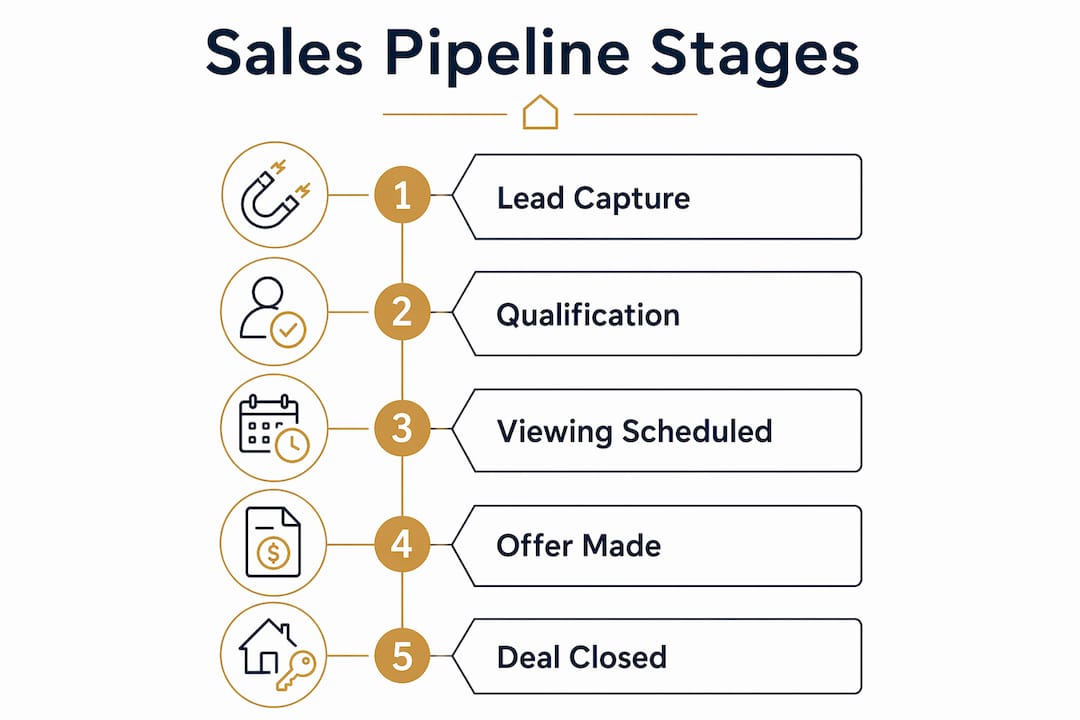
Salesforce recommends scheduling regular pipeline reviews to adapt both process and technology to market realities. For Singapore real estate, a practical pipeline includes these stages:
Prospecting: Identify buyers or sellers matching your target profile
Qualification: Confirm budget, authority, need, and timeline using frameworks like BANT
Viewing: Schedule and complete property viewings with documented next steps
Negotiation: Track offer status and counteroffers with clear owner assignments
Compliance checks: CEA registration, ABSD eligibility, HDB rules verified before advancing
Closing: Execute OTP, collect documentation, and hand off to conveyancing
Pro Tip: Define exit criteria for every stage, not just activities. “Viewing scheduled” is an activity. “Viewing completed and buyer confirmed interest in writing” is an exit criterion. Pipelines built on activities alone produce stagnant deals that inflate your numbers without moving your revenue.
For team leaders, sharing pipeline data in weekly reviews keeps every agent accountable and surfaces coaching opportunities before a quarter goes off track. Integrating your CRM with email and calendar tools means activity logging happens automatically, removing the admin burden that causes reps to skip updates.

Which tools support pipeline tracking for Singapore real estate professionals?
The right sales tracking software depends on your team’s size, technical comfort, and how much customization your compliance workflow demands. Here is how the leading platforms compare on the features that matter most in this market:
Pipedrive offers a drag-and-drop visual pipeline with customizable stages and activity tracking tied to each deal. Its Workflow Automation triggers actions when deals reach specific stages, reducing manual follow-up work for busy agents.
HubSpot provides a free pipeline management tier with deal stage customization, automated data entry from contact records, and a sales dashboard that surfaces bottlenecks at a glance. Its predictive deal scoring helps agents prioritize the opportunities most likely to close.
monday CRM goes further with AI that logs calls automatically, detects stalled deals early, and triggers follow-up sequences based on deal stage and inactivity. Its Deal Insights widget flags deals with no activity in a set number of days, which is particularly useful for Singapore agents managing long compliance timelines.
Salesforce suits larger teams or agencies that need deep CRM integration, territory management, and AI-driven forecasting across multiple agents and pipelines.
ERA’s own Sales+ app brings these capabilities into a platform built specifically for ERA agents, combining performance tracking, digital coaching, and pipeline visibility in one place. Agents joining ERA through Myeracareer gain access to this tool alongside mentorship frameworks designed for the Singapore market.
Core features to look for in any pipeline tool:
Drag-and-drop deal management with customizable compliance stages
Automated workflow triggers for follow-ups and stage changes
AI monitoring of deal velocity and engagement patterns
Integration with email, calendar, and CEA-related documentation workflows
Common pipeline mistakes Singapore agents make and how to fix them
The biggest error is treating the pipeline as a static report rather than a live momentum tracker. Agents update stages after meetings but never purge deals that have gone cold, so the pipeline looks full while actual deal flow has stalled.
A second common mistake is over-automating follow-ups at the expense of personal communication. In Singapore’s relationship-driven property market, a template email sequence cannot replace a well-timed personal call, especially during negotiation or when a buyer is weighing ABSD implications.
Skipping qualification is a third pattern that costs agents weeks of wasted effort. Deals that enter the pipeline without confirmed budget and decision-making authority inflate stage counts and distort forecasting. Defining strict qualification criteria before a lead advances past initial contact keeps the pipeline honest.
How Singapore real estate teams use pipeline data in practice
ERA team leaders use pipeline dashboards to run structured weekly reviews, tracking which agents have deals stalled in the compliance stage and intervening before deadlines are missed. New agents joining through Myeracareer’s onboarding program learn to map their buyer interactions to specific pipeline stages from day one, building forecasting discipline early in their careers.
Experienced agents use AI-powered alerts from tools like monday CRM to flag deals where engagement has dropped, prompting a personal outreach before the buyer goes cold. This proactive approach, grounded in real deal data rather than manual check-ins, is how top performers in Singapore’s competitive market maintain conversion rates that consistently outpace the field.
Key Takeaways
Effective sales pipeline tracking in Singapore real estate requires defined compliance stages, strict exit criteria, and AI-powered monitoring to keep deals moving and forecasts accurate.
Point | Details |
Define compliance stages | Add CEA registration, ABSD, and HDB eligibility as dedicated pipeline stages before closing. |
Use exit criteria, not activities | A deal advances only when the buyer confirms the next step, not when you complete a task. |
Review pipelines weekly | Regular reviews surface stalled deals early and give team leaders concrete coaching data. |
Balance automation with personal contact | Automated follow-ups support but never replace direct communication in Singapore’s relationship-driven market. |
Choose tools with AI monitoring | Platforms that flag deal velocity and engagement patterns catch at-risk deals before they are lost. |
Recommended
Comments