
Pass Both RES Papers: Singapore syllabus mapped to 8–10 week plan

The RES exam tests your grasp of CEA competency units across two 2.5 hour papers, covering everything from land law to HDB resale procedures. You need 60 out of 100 marks in each paper to pass, and you cannot even register until you complete a CEA-approved RES course with at least 75% attendance. Each paper mixes 60 standalone multiple-choice questions with 20 case-study questions built around real transaction scenarios.
TL;DR:
Candidates must master financial calculation formulas such as stamp duty tiers and LTV ratios through regular practice to avoid errors under time pressure.
Passing requires scoring at least 60 out of 100 marks on each paper, with both papers scored independently and separate re-sit options available.
The exam heavily tests legal reasoning on land law, contracts, and property registration, with case studies combining multiple concepts in real transaction scenarios.
Sittings occur three times a year, and early registration during Stage 1 boosts chances of securing preferred dates and venues.
A full RES course completion with at least 75% attendance from a CEA-approved provider is mandatory before registration, and preparation should span at least 8 to 10 weeks with structured practice.
Table of Contents
What Is the RES Exam Syllabus at a Glance?
Both papers run 2.5 hours and split into two sections. Section A carries 60 standalone MCQs worth 60 marks; Section B carries 20 case-study MCQs worth 40 marks, drawn from one or two extended scenarios. You need 60 out of 100 to pass each paper separately.
Duration: 2.5 hours per paper
Marks: 100 total per paper, split 60/40 across Section A and B
Fee: the official fees apply for a full sitting of both papers and for a modular re-sit of one paper, please confirm the current amounts on CEA’s website
Registration: two stages, Indication of Interest followed by paid registration on NTUC LearningHub
Fees apply for a full sitting and for a modular re-sit, but you should always confirm the current figures on CEA’s website before paying, since fee schedules do shift. Seats during Stage 1 fill quickly, so treat that window as a deadline, not a suggestion.
Paper 1: Land Law and Contract Fundamentals
Paper 1 sits on two competency units, and both lean heavily on legal reasoning rather than memorization. Competency Unit 1 covers the real estate market overview, land basics, the State Lands Act, rights in another’s land (easements, licenses, and similar interests), and registration of titles under Singapore’s land title system. These topics build the legal skeleton everything else in the syllabus hangs on.
Competency Unit 2 shifts into private law: contract law, the law of agency, landlord and tenant relationships, negligence, conveyancing procedure, mortgage law, trusts, succession (including intestacy basics), co-ownership structures, and planning and development controls. This is the densest single block in the entire syllabus, and it rewards candidates who understand why a rule exists rather than just what it says.
Real estate market overview and land basics
State Lands Act and rights in another’s land
Registration of titles
Contract, agency, and landlord/tenant law
Negligence, conveyancing, and mortgage law
Trusts, succession, co-ownership, and planning/development
Land law fundamentals and contract law deserve the largest share of your study hours in Paper 1. Both feed directly into Section B case studies, where a single vignette might test title registration, an easement dispute, and a contract breach all in one scenario.
Pro Tip: Draw a simple flowchart connecting the stages of a property transaction, from offer to completion, and mark where each legal concept (agency duty, conveyancing step, mortgage registration) applies. Case-study questions almost always test the junction points between concepts, not the concepts in isolation.
Paper 2: Regulation, HDB Rules, and Financial Calculations
Paper 2 covers Competency Units 3 and 4, and this is where candidates who skipped the numbers tend to lose marks. Competency Unit 3 focuses on regulation and the role of the salesperson: your conduct obligations, marketing and advertising rules, and the Consumer Protection (Fair Trading) Act as it applies to property transactions.
Competency Unit 4 is the practical engine room of the exam. It covers sales of completed and uncompleted properties, HDB practices and eligibility rules, leasing transactions, property-related taxes, property finance, and the financial calculations that tie all of it together, things like stamp duty, Loan-to-Value limits, and commission math.
Regulation, salesperson conduct, and the Consumer Protection Act
Marketing and advertising rules
Sales of completed and uncompleted properties
HDB practices and eligibility
Leasing, property taxes, and property finance
Financial calculations (stamp duty, LTV, commission)
Budget extra time for HDB procedures and financial calculations specifically. HDB transactions carry their own eligibility rules, resale procedures, and grant schemes that private property questions never touch, and stamp duty math tends to appear in both standalone and case-study formats. Candidates frequently underestimate this section, and a short daily drill on calculations pays off more than another read-through of the regulation chapter.
Pro Tip: Keep a one-page cheat sheet of every formula (stamp duty tiers, LTV ratios, commission splits) and rewrite it from memory every few days until you no longer need to check it. Financial calculation errors are almost always arithmetic slips under time pressure, not conceptual gaps.
How Does Scoring and the Pass Mark Actually Work?
Section A rewards breadth. Each of the 60 questions stands alone, so a wrong answer costs you one mark and nothing more. Section B works differently: 20 questions cluster around one or two case studies, and getting the underlying scenario wrong can cost you several questions in a row.
You need 60 out of 100 marks per paper, and both papers must be passed independently. Scoring 90 on Paper 1 does not offset a 55 on Paper 2. If you fail one paper, modular re-sit rules let you retake just that paper at the lower $283.40 fee rather than sitting both again at $512.30.
Section A: 60 independent MCQs, one mark of risk per question
Section B: 20 MCQs tied to shared case studies, higher risk per scenario
Pass mark: 60/100 per paper, papers scored independently
Re-sit: modular, cheaper, and limited to the failed paper only
Who Can Register and What Do You Need Ready?
Registration hinges on one prerequisite: you must complete a RES course from a CEA-approved course provider with at least 75% attendance, which earns you the Certificate of RES Course Completion. No certificate, no exam booking.
Complete a CEA-approved RES course with at least 75% attendance.
Obtain your Certificate of RES Course Completion from the provider.
Gather your NRIC, course certificate, and Singpass login ahead of registration.
Submit an Indication of Interest during Stage 1 on NTUC LearningHub.
Complete payment during Stage 2 once your slot is confirmed.
Move fast once Stage 1 opens. Seats for popular sittings disappear within days, and missing the window means waiting for the next scheduled sitting months later. Fees are charged for a full sitting and for a re-sit, but confirm the current amounts on CEA’s site before payment, as these numbers are reviewed periodically.
Pro Tip: Set a calendar alert for the exact date Stage 1 opens, not just the general month. NTUC LearningHub publishes precise windows, and candidates who register on day one consistently get first pick of sitting dates and venues.
When Are the 2026 RES Exam Sittings?
Sittings typically run three times a year, each with its own course-completion cut-off and a two-stage registration window. For 2026 sittings, you need your Certificate of RES Course Completion in hand before the relevant cut-off date, then act during Stage 1 to indicate interest before paying in Stage 2.
Confirm your course cut-off date matches the sitting you’re targeting.
Register during Stage 1 as early as possible, then complete Stage 2 payment promptly.
Bring your NRIC and ensure Singpass access works before exam day, since authentication happens at the venue.
Arrive early. Late arrivals are typically barred from entering once the paper begins.
What Does an Effective RES Exam Study Plan Look Like?
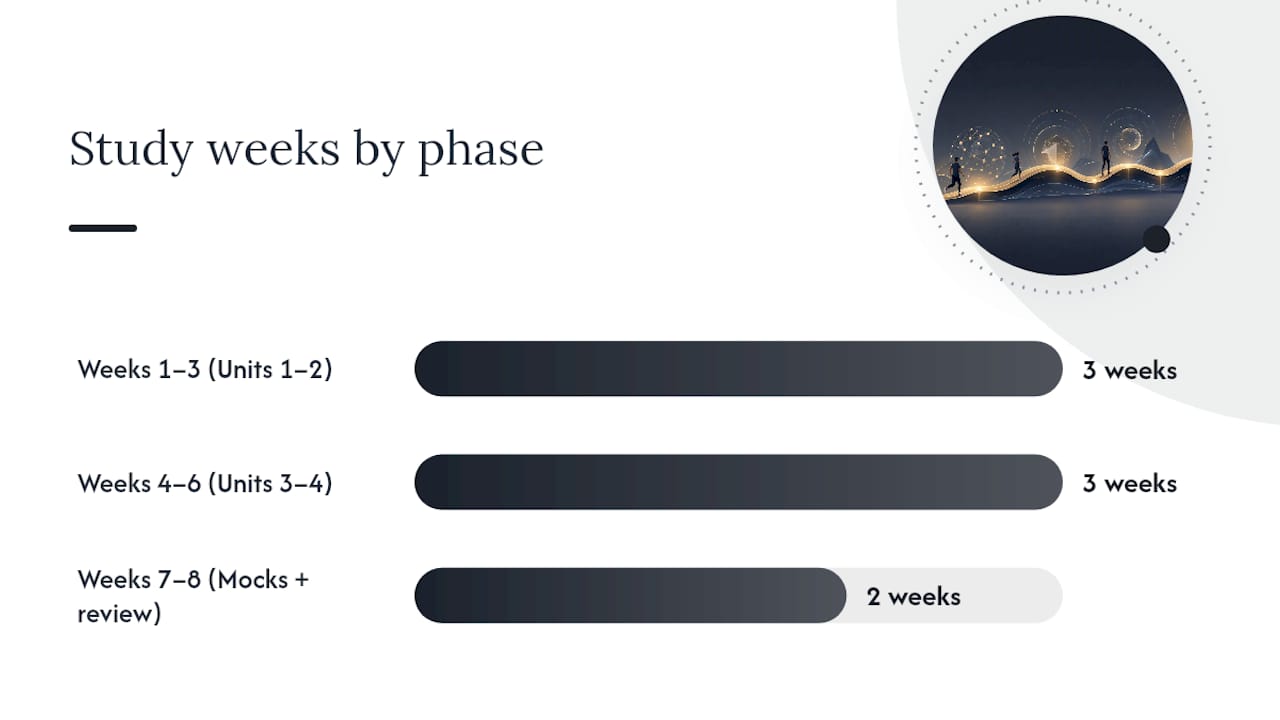
Treat your prep as an 8 to 10 week block, not a last-minute cram. Map every competency unit to a weekly study block, then convert each block into timed practice sets before moving on.
Weeks 1 to 3: Cover Competency Units 1 and 2 (land law, contract, agency), running 50 to 100 practice questions per week drawn from the official syllabus topic list.
Weeks 4 to 6: Cover Competency Units 3 and 4 (regulation, HDB, financial calculations), drilling stamp duty and LTV math daily.
Weeks 7 to 8: Run full timed mock papers using the official sample questions, aiming for at least four complete run-throughs before sitting day.
The most common pitfalls are rushed financial calculations, weak HDB rule recall, and poor time management on Section B case studies. CEA’s guidance also notes that policy changes announced or implemented within one month of your exam date won’t be tested, which narrows what you actually need to track in the final stretch. Pre-annotate each case study’s likely checkpoints (eligibility, tax triggers, mortgage limits) before answering to cut down on reread time.
Pro Tip: During mock papers, time Section B separately from Section A. Most candidates run out of time on the case studies because they read the full scenario twice before answering the first question, when a faster pass with pre-annotation saves several minutes per case.
What Happens After You Pass the RES Exam?
Passing both papers is the gateway, not the finish line. You’ll need to complete CEA registration under a licensed estate agency within the validity window CEA specifies, since certificates and pass results don’t stay open indefinitely. From there, most new agents move straight into onboarding, mentorship, and structured training with their chosen agency to start practicing with support.
What New Agents Get Wrong Before They Even Sit the Exam
Candidates I’ve seen come through recruitment and onboarding consistently make the same two mistakes: they underestimate the financial calculations section, and they treat Section B case studies like reading comprehension instead of applied law. Both are fixable with deliberate practice, not raw study hours. The bigger issue is candidates who pass the exam and then have no structured plan for their first six months in the field, which is exactly where mentorship and a real onboarding training pathway makes the difference between a slow start and a fast one.
— Donny
Getting Guided Support After You Pass the RES Exam
Passing the RES exam gets you the license. It does not hand you a pipeline of clients, a sales script, or a mentor who has already made the mistakes you’re about to make. Some providers close this gap for newly licensed agents in Singapore with structured onboarding and mentorship from day one, instead of leaving them with just a license and a desk with no roadmap.

New agents working with Myeracareer get paired mentorship, practical sales training, and access to the Sales+ app for tracking leads and performance from the first week, rather than figuring it out alone through trial and error. If you’ve just passed or are about to sit your RES exam, visit the New Agents page to see how the onboarding path works and what support looks like once you’re licensed.
Sources
FAQ
What Topics Are Covered in the RES Course Syllabus?
The syllabus spans four competency units: land law and market fundamentals, contract and related private law, regulation and the salesperson’s role, and property transactions including HDB rules and financial calculations.
Is It Difficult to Pass the RES Exam?
The exam demands broad legal and financial knowledge across two papers, and candidates who skip financial calculations or underestimate case-study time management tend to struggle most; structured preparation with official sample questions reduces that risk considerably.
How Many Marks Do You Need to Pass the RES Exam?
You need 60 out of 100 marks on each paper, and both papers are scored independently, so a strong score on one cannot offset a failing score on the other.
What Is the RES Exam Format?
Each paper runs 2.5 hours and includes Section A with 60 standalone MCQs and Section B with 20 case-study MCQs, for 100 marks and 80 questions total per paper.
Recommended
Comments