
Open House Planning That Converts: Templates for Agents, 24 Hour Follow Up
Open house planning works when you treat the event as a repeatable lead-generation campaign, not a one-time showing. The primary KPI that matters is sign-in-to-appointment conversion, and a well-run event should turn a healthy share of visitors into a follow-up call within 24 hours. Everything below walks through preparation, promotion, day-of execution, and the follow-up cadence that turns foot traffic into a client roster.
TL;DR:
Sign-in-to-appointment conversion is the key KPI, and agents should aim to follow up with hot leads within hours of the event.
Consistent promotion with clear messaging, including signage, social media, and neighborhood outreach, significantly increases attendee numbers.
During open hours, sign-in visitors promptly, build rapport using the FORD method, and reserve early access for neighbors to gather local interest.
Follow-up effectiveness depends on timely, personalized communication tailored to lead categories, with multiple contacts over time to convert warm leads.
Tracking metrics such as visitor count, sign-ins, and appointment rates helps identify areas for improvement, ensuring open houses generate ongoing leads.
Table of Contents
Open House Preparation Checklist: What to Do Before the Day
Not every listing deserves an open house. Before you commit a weekend, check that the property fits its neighborhood and that comparable homes have drawn steady buyer traffic. A multi-week preparation timeline reduces the last-minute scrambling that ruins otherwise good listings. Breaking the work into stages keeps you from forgetting something that matters on the day itself.
One week out:
Confirm photography is current and matches the MLS listing. Order new photos if the home has been re-staged.
Walk the seller through depersonalizing using real estate planning conversation starters: family photos, religious items, and clutter come down (conversation starters playbook). Buyers need to picture their own furniture, not yours.
Draft the flyer and one-pager with price, square footage, and a QR code linking to the full listing.
Map directional sign placements at the two or three busiest intersections feeding the property.
Two to three days out:
Door-knock the immediate block to invite neighbors personally.
Confirm parking arrangements with the seller, including whether driveways or curb space are available.
Finalize security precautions: lock away medications, valuables, and firearms, and confirm whether a sign-in requirement will be enforced at the door.
One day before:
Print signage and stage the directional route in your head or on a map app.
Coach the seller one more time on what to remove from countertops and closets.
Confirm logistics with the listing agent: who arrives first, who handles the lockbox, who greets late visitors.
Hours before:
Do a room-by-room sweep: beds made, dishes away, trash out, pet items out of sight.
Set out the flyer stack, sign-in materials, and business cards near the entry.
Test the QR code on your phone before anyone else scans it.
Pro Tip: Keep a laminated room-by-room checklist in your car. You will reuse it at every listing, and it takes the guesswork out of a rushed final walk-through.
How Do You Promote an Open House Effectively?
Promotion decides whether your open house draws serious buyers or nobody at all. Start with the MLS listing itself: the event description needs a clear date, time window, and a short line about what makes this showing worth a Saturday drive, not just a repeat of the listing description.
From there, layer in these channels:
Social media: post a 30 to 60 second walkthrough clip on the Friday before, boost it locally with a small paid spend, and share it in neighborhood Facebook or Nextdoor groups where allowed.
Neighborhood outreach: door-knock two to three days prior and hand-deliver postcards to homes within a few blocks. Offer an invite-only early window for neighbors before the general public arrives.
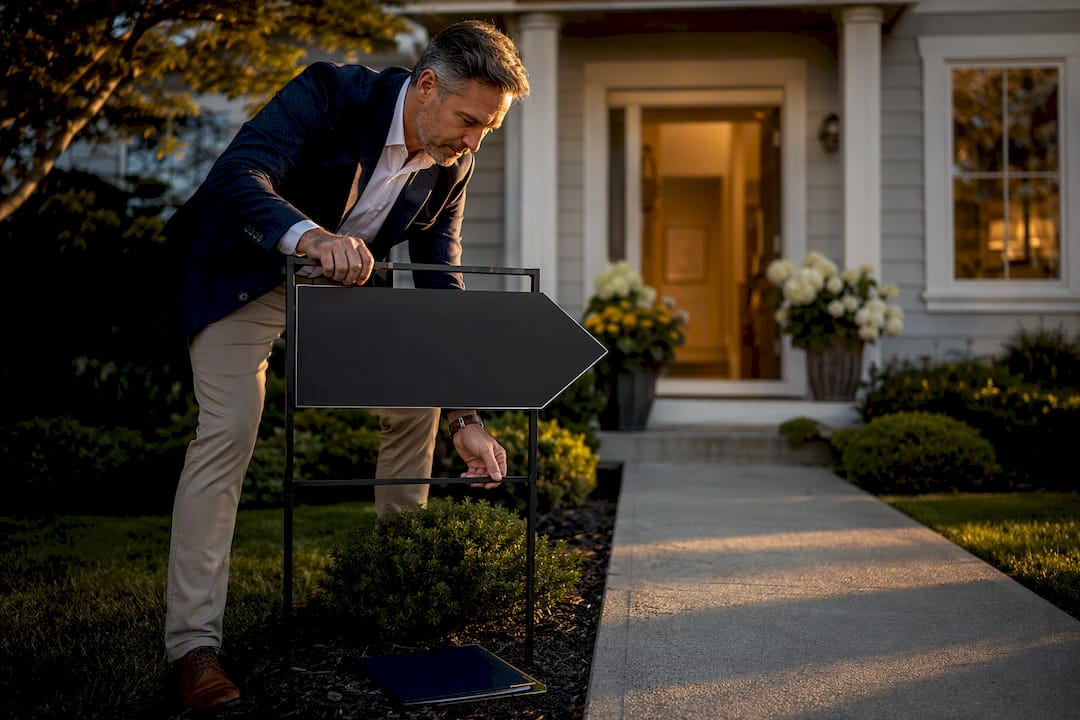
Signage: tall banners and feather flags at the main approach, directional arrows at every turn a driver would need, and a QR code on the yard sign linking straight to the listing. Place signs the morning of the event and check them again at the midpoint, since wind and passing traffic knock them over more often than agents expect.
Every channel should repeat the same hook, a single sentence that gives buyers a reason to show up: “Rare corner lot on Maple, five minutes from the new transit line” works better than “Open house Saturday 1 to 3.”
Pro Tip: Write the hook first, then build every flyer, post, and MLS description around it. Consistent messaging across channels is what makes casual scrollers remember the address.
What Should Happen During Open House Hours?
Arrive one hour early. That window is enough to run a final property sweep, turn on every interior light, and open curtains to bring in natural light. Set the thermostat between 68 and 72°F so the house feels comfortable regardless of the season, and put on quiet background music that fills silence without competing with conversation.
Sign-in first. Whether you use a paper sheet or a tablet app, capture name, phone, email, and whether the visitor is currently working with an agent. A one-line consent note (“By signing in, you agree to receive follow-up from [your name]”) keeps things transparent.
Open with a proximity question. Something like “Do you live nearby, or are you searching in a specific area?” within the first two minutes tells you more than a stack of intake questions ever will.
Use FORD to build rapport: family, occupation, recreation, motivation. It sounds informal because it is. Buyers open up faster to a real conversation than to a script that sounds like an interview.
Reserve a neighbor-only hour. Early access for people who live within a mile builds local credibility and often surfaces off-market sellers who weren’t planning to list yet.
Sellers should generally not be present. Buyers speak more freely, and negotiating leverage stays intact when the seller isn’t overhearing candid reactions.
Never let a visitor leave empty-handed. A market snapshot for their specific street or a straight answer on school boundaries does more for follow-up engagement than a branded pen.
How Should You Follow Up With Open House Leads?
Sort every sign-in the same night into four buckets: hot (ready to transact), warm (interested but early), neighbor (local intel, not necessarily a buyer), and agent-represented (hands off, but log for future reference). Each bucket gets a different next action, and mixing them up wastes calls that could have closed.
Hot leads: call within a few hours, not the next morning. Reference something specific they said about the house.
Warm leads: send a same-day text or email with the promised value-add, then a personal follow-up call within 24 hours.
Neighbors: add to your farming list and send a short market update within the week.
Agent-represented visitors: log them in your CRM and move on. No direct outreach.
Warm leads rarely convert on one touch. Build a short drip: a market update at day three, a “still thinking about it?” check-in at day ten, and a relevant new listing at day twenty. Track every step in your CRM pipeline so nothing falls through after the initial excitement fades.
Pro Tip: The single biggest follow-up mistake is sending one generic email and stopping. Multiple touches, spaced out and varied in content, are what actually convert a warm sign-in into an appointment.
What Metrics Prove an Open House Worked?
Track five numbers for every event: total visitors, sign-ins, capture rate (sign-ins divided by visitors), appointments booked, and eventual conversions to buyer or listing clients.
Capture rate: sign-ins ÷ total visitors
Follow-up conversion: appointments booked ÷ warm and hot sign-ins
Event ROI: new clients generated ÷ hours invested in prep, promotion, and the event itself
Benchmark to test against: if you’re converting fewer than one in five warm sign-ins into an appointment within two weeks, the gap is almost always in follow-up timing, not the open house itself. A performance dashboard that logs these numbers event over event is what turns one good Saturday into a repeatable system.
Common Open House Mistakes and Quick Fixes
Running one open house and calling it a marketing plan is the most common error. Consistency across several weekends in the same target neighborhood is what builds recognition and referrals.
Weak signage: add directional arrows at every turn, not just the front yard.
Bad timing: stick to a two to four hour window; anything longer drains energy without adding traffic.
No follow-up: log every sign-in the same day, no exceptions.
Over-interrogating visitors: lead with the proximity question and FORD, not a mortgage pre-qualification checklist.
Quick audit: if visitors are polite but leave without asking a single question, your ambience or your conversation opener needs work, not your marketing budget.
Myeracareer Resources That Support This System
Templates close the gap between reading a checklist and actually running one. A ready-made sign-in sheet, a 24-hour follow-up email template, and a room-by-room staging checklist remove the friction that keeps agents from executing consistently.
Sign-in sheet with consent language built in
24-hour follow-up email and call script templates
Room-by-room staging and depersonalizing checklist
Seven objection-handling scripts for follow-up calls when a warm lead hesitates
The agent performance dashboard maps directly to the metrics above, tracking sign-ins, capture rate, and appointments booked event over event. Agents preparing seller conversations can also draw on a listing presentation guide to align staging talking points with what buyers actually respond to at the door.
Pro Tip: Save every template with the property address and date in the file name. Reviewing past events side by side is the fastest way to see which changes actually moved your numbers.
Budgeting for an Open House Without Overspending
Signage, printed flyers, and light refreshments make up most of a typical open house budget, and none of them need to be expensive to work. Directional signs and feather flags are a one-time purchase that gets reused at every listing, which makes the per-event cost shrink fast once you’ve run a handful of open houses.
Skip elaborate catering. A simple spread of water bottles and light snacks costs little and serves the purpose better than a full spread nobody has time to eat. Paid social boosts deserve a small, fixed amount per event, tested and adjusted based on which posts actually drove sign-ins rather than views.
The real budget risk isn’t overspending, it’s underspending on the items that create first impressions: fresh flowers, working light bulbs in every fixture, and a clean walkway. These cost a few dollars and matter more to a buyer’s gut reaction than a printed brochure ever will. Track your spend per event alongside your conversion numbers, and you’ll quickly see which line items earn their place and which ones can be cut without hurting results.
Legal and Safety Considerations for Open Houses
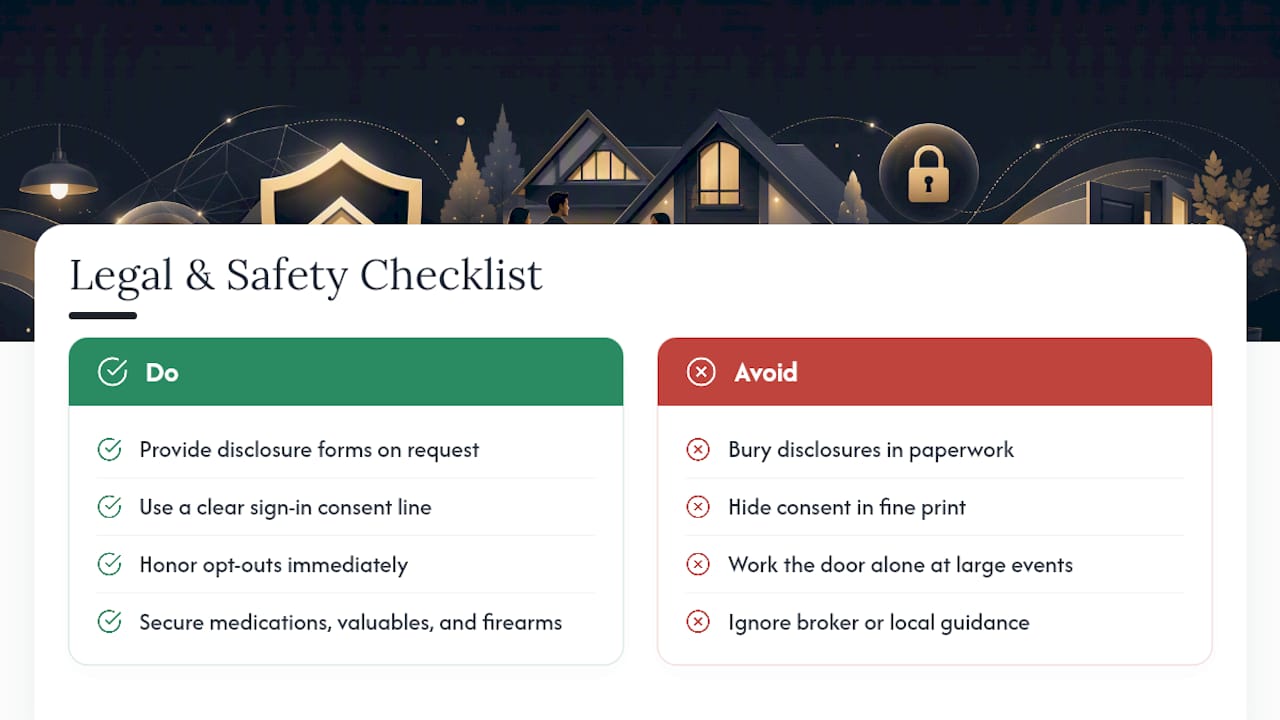
Disclosure obligations don’t pause for an open house. Sellers must disclose known material defects before any offer is made, and agents should confirm the disclosure form is complete and available for serious buyers to review on request, not buried in paperwork they never see.
Sign-in requirements deserve a clear, simple consent line rather than fine print. Tell visitors plainly that signing in means they may receive follow-up contact, and honor opt-outs immediately if someone asks not to be contacted.
Safety runs both directions. Secure medications, valuables, and any firearms before visitors arrive, and consider whether a second agent or assistant should be present for larger events so no one works the door alone. If local health guidance around gatherings changes, adjust visitor flow accordingly, spacing arrivals and keeping doors and windows open for ventilation rather than canceling the event outright. None of this replaces guidance from your broker or local real estate board on current disclosure and safety requirements specific to your market.
An Open House Is a Neighborhood Audition, Not a One-Off
Run the same listing type in the same target neighborhood weekend after weekend, and the pattern becomes obvious: traffic builds, neighbors start recognizing your signs, and referrals show up before you ask for them. One well-executed Saturday rarely changes a business. Ten of them, tracked and adjusted with the checklist above, usually do.
— Donny
How Myeracareer Helps You Run This System Faster
Myeracareer gives you the templates and training to skip the trial-and-error version of everything above. Instead of building a sign-in sheet, a follow-up script, and a tracking spreadsheet from scratch, new agents get them ready to use from day one, alongside guidance on the RES exam and CEA licensing requirements that come before any of this matters.

Agents scaling their pipeline activity get more out of the Sales+ app and performance dashboard, which turn the metrics from this guide into something you can actually review event over event instead of guessing whether last weekend worked. New agents get structured onboarding and mentorship so the first few open houses don’t feel like guesswork. If you’re preparing for licensing or ready to bring a repeatable system to your next listing, start your onboarding as a new agent and get the templates, scripts, and coaching to run your first campaign-style open house this month.
Sources
Recommended
Comments