
CEA Licensing Requirements in Singapore: 2026 Guide


Anyone conducting estate agency work in Singapore must either hold a valid Estate Agent (EA) licence or be registered as a Real Estate Salesperson (RES) under a licensed EA. The fastest path to compliance runs through the Council for Estate Agencies (CEA) and its online portal, ACEAS, where both EA licence applications and RES registrations are submitted and tracked.
Before you log in, here are your immediate next actions:
Confirm your category: Are you operating a brokerage or hiring salespersons? You need an EA licence. Are you selling or renting property under a licensed EA? You need RES registration.
Check eligibility: Minimum four GCE O-Level passes (or equivalent), correct citizenship or work-pass status, and the right age.
Prepare your Singpass (individuals) or Corppass (entities) before touching ACEAS.
Book your REA course and exam if you are pursuing KEO status, or your RES exam if you are registering as a salesperson.
Key Takeaways
Meeting CEA licensing requirements in Singapore means satisfying eligibility criteria, completing the correct exam, submitting a complete ACEAS application, and maintaining ongoing CPD and PII obligations throughout the licence period.
Point | Details |
EA vs. RES distinction | EAs are business entities (Corppass); RESs are individuals under a licensed EA (Singpass). |
KEO transaction threshold | KEO eligibility requires at least 30 property transactions in the last three years. |
Foreign qualifications | CEA assessments are valid for three years; notarized copies are never accepted. |
2027 three-year cycle | CEA’s new licensing cycle and Currency Requirement take effect from 2027; plan CPD and transaction records accordingly. |
Myeracareer onboarding | New agents can access structured ACEAS guidance, RES exam prep, and sales coaching through Myeracareer’s new agent program. |
Table of Contents
Who needs an EA licence versus a RES registration?
The distinction matters legally and operationally. An Estate Agent (EA) is a business entity — a sole proprietorship, partnership, or company — that conducts estate agency work as an organization. A Real Estate Salesperson (RES) is an individual who carries out estate agency work on behalf of a licensed EA.
If you plan to run a brokerage, recruit and supervise salespersons, or operate a digital platform that facilitates property transactions, you need an EA licence. If you are an individual who negotiates, markets, or facilitates property sales and rentals for clients, you register as a RES. KEOs are responsible for administration and supervision of RESs, and an EA must be fully licensed before any estate agency work can begin.
Category | Definition | Who applies | ACEAS account type |
Business entity conducting estate agency work | Sole proprietors, partnerships, companies | Corppass | |
Individual salesperson under a licensed EA | Singaporeans, SPRs, eligible foreigners | Singpass |
Immediate indicators that you need an EA licence rather than RES registration:
You are setting up or already operating a property brokerage.
You intend to recruit, manage, or supervise other salespersons.
Your business model involves earning fees at the entity level from property transactions.
You are changing your business structure (e.g., from sole proprietorship to company), which CEA treats as a brand-new EA licence application requiring fresh PII, KEO checks, and ACEAS entity setup.
RES eligibility: age, citizenship, and academic requirements
CEA sets clear minimum criteria for RES registration. Meeting all of them before you apply saves significant time and avoids rejection.
Age and citizenship/residency:
Minimum age of 21 years at the point of registration.
Singapore Citizens and Singapore Permanent Residents (SPRs) are eligible.
Foreigners holding a valid Employment Pass (EP) issued by the Ministry of Manpower may apply, subject to CEA’s assessment.
Other work-pass holders (S Pass, Work Permit) are generally not eligible.
Academic qualifications:
Minimum four GCE O-Level passes, including English Language, or a recognized equivalent.
Applicants who do not meet the academic baseline may qualify through the Workplace Proficiency and Literacy Numeracy (WPLN) assessment at the required level.
Foreign or private qualifications require a separate CEA Educational Qualification Assessment before they can be accepted (see Section 9 for the full verification process).
Common edge cases:
Applicants with combined O-Level sittings across different years may still qualify, provided the cumulative passes meet the four-subject minimum.
Holders of polytechnic diplomas or degrees generally satisfy the academic requirement, but foreign degrees still need CEA’s assessment.
Pro Tip: Bring original academic certificates to any verification appointment. CEA does not accept notarized copies as proof of qualification, and submitting the wrong document type is one of the most common causes of application delays.
Do you need the REA course and exam?
The REA (Real Estate Agency) course and examination apply specifically to individuals seeking to become a Key Executive Officer (KEO) of an EA, not to RES applicants. If you are registering as a RES, you sit the RES exam instead.
Aspiring KEOs must complete the REA course with a CEA Approved Course Provider and obtain a Certificate of REA Course Completion before registering for the REA examination, unless they hold a recognized qualifying credential that grants an exemption.
Core requirements for KEO candidates:
Complete the REA course through a CEA Approved Course Provider (SIEA, the Singapore Institute of Estate Agents, is one recognized provider).
Obtain the Certificate of REA Course Completion before booking the exam.
Pass the REA examination within two years prior to the EA licence application date.
Recognized exemptions from the REA course or exam:
Holders of a law degree from a recognized university may be exempt from certain REA exam papers.
Individuals with specific professional qualifications recognized by CEA may qualify for partial or full exemptions.
Check CEA’s current exemption list directly, as paper adjustments and recognized qualification updates occur periodically.
Course completion certificate validity: The certificate does not expire, but the REA exam pass must fall within two years of your EA licence application. Plan your exam timing accordingly.
For RES candidates, the path is the RES exam rather than the REA route. A detailed breakdown of exam structure, dates, and preparation resources is available in Myeracareer’s RES exam Singapore guide.
How to register as a RES in ACEAS, step by step
ACEAS is the official system for submitting and tracking EA licence and RES registration applications, with individuals accessing it via Singpass and corporate entities via Corppass.
Pre-requisites before you log in:
Active Singpass account with 2FA enabled.
Verified academic qualifications (originals or CEA-accepted equivalents).
RES exam pass certificate.
Confirmation from your sponsoring EA that they will endorse your registration.
Step-by-step ACEAS registration flow:
Log in to ACEAS using Singpass.
Create or update your individual profile, confirming personal details and uploading your NRIC or valid pass.
Upload your academic qualification documents and RES exam pass certificate.
Submit the registration application. Your sponsoring EA’s KEO must log in separately to endorse the application from the EA’s Corppass account.
Monitor your application status via ACEAS. CEA sends email updates at each stage.
Once approved, download your registration certificate from ACEAS.
Typical processing time: CEA does not publish a fixed processing window, but straightforward first-time applications with complete documents generally move faster than those requiring additional verification.
Pro Tip: If you are switching from one EA to another, your new EA must initiate the transfer workflow in ACEAS before your old registration is cancelled. Never resign from your current EA before the new endorsement is in place, or you will have a gap in registration status.
For returning RES applicants who have been inactive, a separate returning-applicant workflow applies in ACEAS. Check the ACEAS user manual for the specific steps, as the document upload requirements differ slightly from a first-time registration.
How to apply for an EA licence and what the KEO role requires
Applying for an EA licence is a multi-step process that begins well before you open ACEAS. EA licence application steps include registering the entity with ACRA, setting up Corppass, purchasing PII, creating an ACEAS entity profile, and uploading transaction records if ACEAS does not already hold them.
EA application prerequisites:
Register the business entity with ACRA and obtain a valid UEN.
Set up Corppass for the entity and link all directors, partners, and the intended KEO as authorized users.
Purchase a Professional Indemnity Insurance (PII) policy that covers the EA and all its registered RESs for the full licence period. EAs must maintain valid PII covering the EA and its RESs, and the cover note must be submitted as part of the application.
Create the ACEAS entity profile and upload the required transaction records (30 transactions in Excel format if ACEAS does not already have them).
KEO eligibility criteria:
Minimum four GCE O-Level passes or recognized equivalent.
REA exam pass within two years prior to the application date, or a recognized qualifying credential.
At least three years of estate agency experience or equivalent managerial experience.
A minimum of 30 property transactions in the last three years, or equivalent business management experience if the candidate comes from a managerial background.
Fit-and-proper checks, including no relevant criminal convictions and no prior regulatory sanctions that would disqualify the candidate.
KEO duties after licensing:
The KEO is not a figurehead role; effective home staging Singapore for property sale and rental is one of the many operational standards that fall under their supervision. Under the Estate Agents Act, the KEO supervises all RESs, maintains the EA’s Standard Operating Procedures (covering RES supervision, complaint handling, and advertising), and is responsible for CPD compliance across the team. Any change in directors or partners must be updated in ACEAS promptly. Failure to maintain accurate records or to supervise RESs properly exposes the EA to licence suspension or revocation.
Documents, fees, and timelines at a glance
Document | Who provides it | Verification notes |
NRIC / valid work pass | Applicant | Original required |
Academic qualification certificates | Applicant | Originals or CEA-accepted duplicates; no notarized copies |
RES or REA exam pass certificate | Applicant | Issued by exam body; upload in ACEAS |
PII cover note | EA (from insurer) | Must cover EA and all RESs for the licence period |
ACRA business profile | EA entity | Current profile, not older than 30 days at submission |
Transaction record (30 transactions) | KEO / EA | Excel format; required if ACEAS does not hold existing records |
CEA Educational Qualification Assessment | Applicant (if foreign/private qualification) | Valid for three years from assessment date |

On fees: CEA publishes application and annual licence fees on its official website. Fees are subject to change, so confirm the current schedule at cea.gov.sg before submitting. EA licence fees are prorated on a half-year basis when a licence is granted mid-cycle.
Timeline guidance:
First-time RES applicants with complete documents: processing is generally faster than EA licence applications.
EA licence applications involving KEO eligibility checks and PII verification take longer, particularly when transaction records require manual review.
Foreign qualification assessments add time before the main application can proceed; submit these well in advance.
For current RES exam dates and scheduling logistics, Myeracareer maintains an updated candidate guide.
Ongoing obligations: CPD, renewals, and the 2027 three-year cycle
Holding a licence or registration is not a one-time achievement. CEA imposes continuing obligations on both EAs and RESs throughout the licence period.
Continuing obligations for RESs and EAs:
Complete the required CPD hours each registration or licence year. Myeracareer’s CEA CPD requirements guide breaks down the specific hour counts and approved activity types.
Maintain valid PII for the full licence period without gaps. A lapsed PII policy can trigger licence suspension.
Retain transaction records and upload them to ACEAS as required. CEA may audit these records.
Self-employed RESs must meet MediSave contribution obligations under CPF Board rules.
Renewal mechanics:
CEA links EA licence renewals directly to RES registration renewals. An EA must renew its licence before its RESs can renew their registrations, which places the operational burden squarely on the KEO to act early. Delays in EA renewal cascade down to every salesperson on the team.
The July 2026 three-year cycle announcement:
CEA announced a new three-year licensing and registration cycle and a Currency Requirement that will take effect from 2027. Under this framework, licences and registrations will run on a three-year cycle rather than the current annual cycle, and a Currency Requirement will apply to ensure practitioners maintain active engagement with the industry. Candidates applying now should factor this change into their long-term planning, particularly around CPD accumulation and transaction record maintenance over the extended cycle.
Key figure: KEO eligibility requires a minimum number of property transactions over recent years — the same threshold that will anchor the Currency Requirement under the 2027 cycle. Start tracking your transaction history from day one.
How CEA assesses foreign and private qualifications
CEA does not automatically accept overseas degrees or private institution certificates as meeting the minimum academic standard. Every foreign or private qualification must go through a formal Educational Qualification Assessment before it can be used in a RES registration or EA licence application.
What the assessment covers:
CEA reviews the qualification against Singapore’s recognized academic equivalency standards.
An accepted assessment is valid for three years. After that period, a fresh assessment is required if you have not yet completed your application.
Notarized copies are explicitly not accepted. CEA requires original certificates, confirmed duplicates issued by the institution, or an official letter of award from the awarding body.
Step-by-step submission process:
Gather your original qualification documents or request a confirmed duplicate directly from your institution.
For China bachelor-level degrees, obtain CSSD (China Higher Education Student Information and Career Center) verification before submitting to CEA.
Email your documents and the completed Educational Qualification Assessment form to licensing@cea.gov.sg.
CEA will respond with an outcome letter confirming whether the qualification is accepted and at what equivalency level.
Keep the outcome letter. You will need to upload it in ACEAS as part of your main application.
If your originals are lost: Contact your institution directly for a letter of confirmation or a duplicate transcript. CEA accepts these in lieu of originals, provided they are issued on official letterhead and signed by an authorized officer of the institution. Do not attempt to substitute a notarized photocopy.
How Myeracareer can help you prepare for CEA licensing
Navigating the CEA licensing process is straightforward when you have the right support structure around you. Myeracareer offers practical, hands-on guidance for candidates at every stage of the licensing and registration process.
Where Myeracareer adds value:
RES exam preparation: Structured study guides, practice materials, and course signposting to help candidates pass on the first attempt. The how to become a property agent guide covers eligibility, exam prep, and early career expectations in detail.
ACEAS onboarding support: Step-by-step guidance on setting up your Singpass profile, uploading documents correctly, and avoiding the common delays that hold up applications.
KEO and EA licence mentorship: For candidates pursuing the KEO path, Myeracareer connects you with experienced team leaders who have navigated the REA course, exam, and EA licence application firsthand.
Ongoing training and CPD: Once licensed, agents benefit from digital coaching, performance tracking, and the Sales+ app, which supports day-to-day client management and portfolio growth.
Myeracareer’s role is recruitment and training, not legal advice. For complex regulatory questions or unusual eligibility cases, contact CEA directly at licensing@cea.gov.sg. For onboarding support and career guidance, the Myeracareer team is the right starting point.
What most applicants get wrong — a practitioner perspective
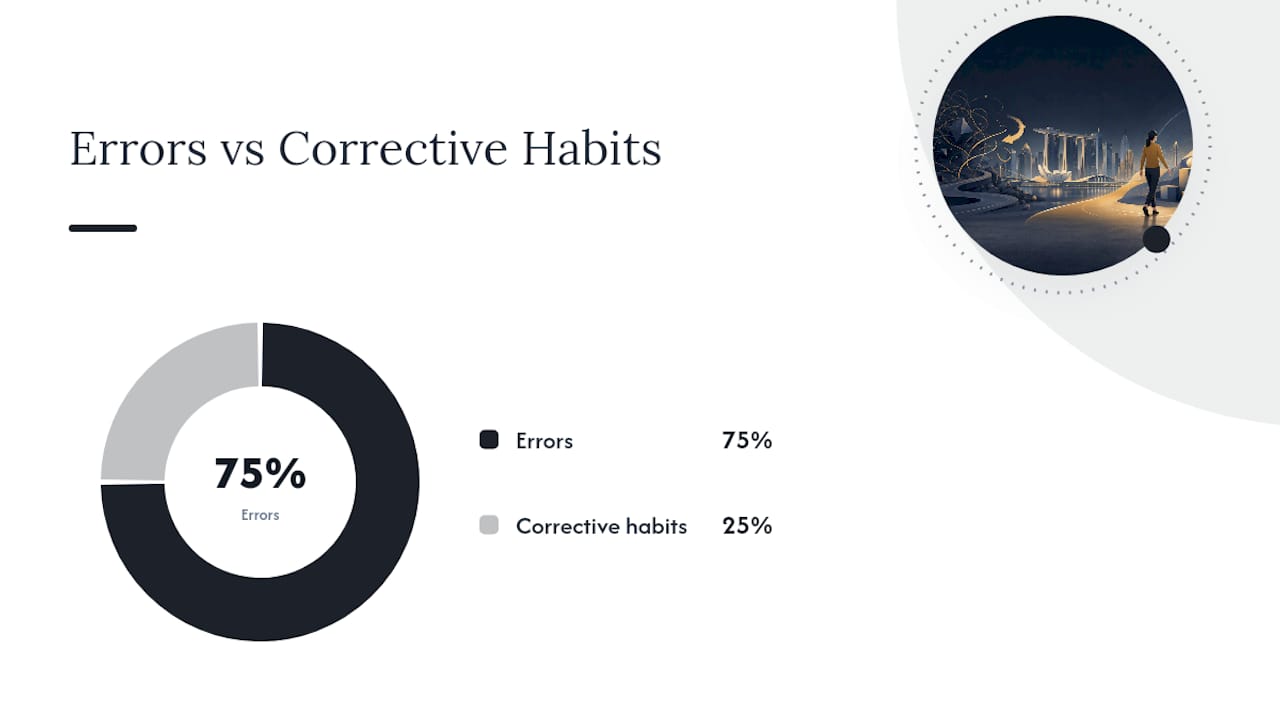
The CEA licensing process is well-documented, but a handful of avoidable errors account for the majority of application delays and rejections. Here is what experienced practitioners see repeatedly.
Six errors that derail applications:
Missing individual ACEAS profiles. KEOs, directors, and partners must each have active individual ACEAS profiles before an entity application can be processed. Skipping this step is the single most common cause of application hold-ups.
Wrong qualification proof. Submitting notarized copies instead of originals or confirmed duplicates. CEA is explicit: notarized copies are not accepted.
Expired PII. Purchasing PII too early means the policy may lapse before the licence is granted. Time the PII purchase so the cover period aligns with your expected licence start date.
Incorrect KEO removal workflow. When a KEO leaves an EA, the outgoing KEO must be formally removed in ACEAS before a new KEO can be appointed. Skipping the removal step locks the entity profile.
Misunderstanding the 30-transaction requirement. The 30 transactions must be from the last three years and must be uploaded in the CEA-specified Excel format. Transactions outside the window or in the wrong format are rejected.
Overlooking the REA exam two-year window. The REA exam pass must fall within two years of the EA licence application date. Candidates who passed the exam early and then delayed their application find themselves needing to resit.
Two corrective habits that prevent most of these errors:
Build a personal compliance checklist before you open ACEAS, and assign ownership of each item (who provides the document, who uploads it, who endorses it).
Download and read the ACEAS user manual before your first session. CEA publishes it on the ACEAS page, and it answers most workflow questions before they become problems. For genuinely unusual cases, contact CEA early rather than guessing.
Myeracareer: where your licensing preparation meets your career launch
Passing the RES exam and completing your ACEAS registration are the starting line, not the finish. What happens in the first 12 months of your career, the mentorship you receive, the tools you use, and the team you join, determines whether your licence translates into real income and long-term portfolio growth.

Myeracareer, ERA’s dedicated recruitment and training platform, gives newly licensed agents a structured onboarding path that covers ACEAS setup, CEA compliance basics, and active sales coaching from day one. The Sales+ app puts AI-powered client management and performance tracking in your hands from your first transaction. Whether you are sitting your RES exam this quarter or finalizing your EA licence application, the new agent onboarding program at Myeracareer is built to get you productive, compliant, and confident faster than going it alone. Reach out to the Myeracareer team to discuss your timeline and find the right entry point for your career.
Useful official resources
Direct links to the primary CEA pages you will need throughout the application process:
EA licence application — official application page, KEO criteria, PII requirements, and document checklist.
EA licensing matters — transaction record templates, switching and returning workflows, and ACRAS process notes.
REA course application — Approved Course Providers list, course completion certificate requirements, and exam exemption criteria.
ACEAS portal and user manual — official system for all licence and registration submissions; user manual and FAQ available for download.
EA licence renewal — renewal mechanics, timing, and the link between EA and RES renewal cycles.
Three-year cycle and Currency Requirement announcement — CEA’s July 2026 newsroom post explaining the 2027 policy changes.
For estate agents overview — general hub for EA-related guidance, KEO responsibilities, and practice circulars.
Sources
Apply for an estate agent licence | Council for Estate Agencies
Apply for the real estate agency course | Council for Estate Agencies
Advanced CEA Estate Agencies System (ACEAS) | Council for Estate Agencies
Estate agent licensing matters | Council for Estate Agencies
CEA’s New Three-Year Licensing & Registration Cycle and Currency Requirement – What It Means for You
Recommended
Comments