
CEA License Renewal: Deadlines, ACEAS Steps, and 2027 Rules


If you hold a real estate salesperson (RES) registration or an estate agent (EA) licence in Singapore, the Council for Estate Agencies opens the annual renewal exercise in October, and you should submit by November 30 to stay clear of a gap in your ability to practice. Your EA must renew its own licence in ACEAS before any of its RES registrations can be processed, so if you’re an agent, the clock partly depends on your agency’s paperwork, not just yours. Before you touch the submission form, confirm three things: your CPD hours meet the current cycle’s requirement, your CPF Medisave contributions and GIRO account are in order, and, if you’re a foreign RES, your Certificate of No Criminal Conviction (CNCC) is current.
Renewal window: typically opens in October, closes in December, but 30 November is the safe submission date
EA licence renewal must clear ACEAS before RES renewals get processed
Check CPD hours, CPF/Medisave status, GIRO readiness, and CNCC (foreign RES) before you start
Processing takes two to three weeks for a complete application, according to CEA’s own renewal guidance. Submit late with missing documents, and you risk not being approved by January 1, which means you can’t legally conduct estate agency work until CEA clears your file.
Key Takeaways
Meeting CEA’s renewal deadline requires EA licence approval first, current CPD credits, and complete documentation submitted well before the January 1 cutoff.
Point | Details |
Submit by November 30 | This buffer accounts for the two to three week processing window before the January 1 deadline. |
EA renews before RES | Your registration can’t process until your estate agency’s own licence renewal clears ACEAS. |
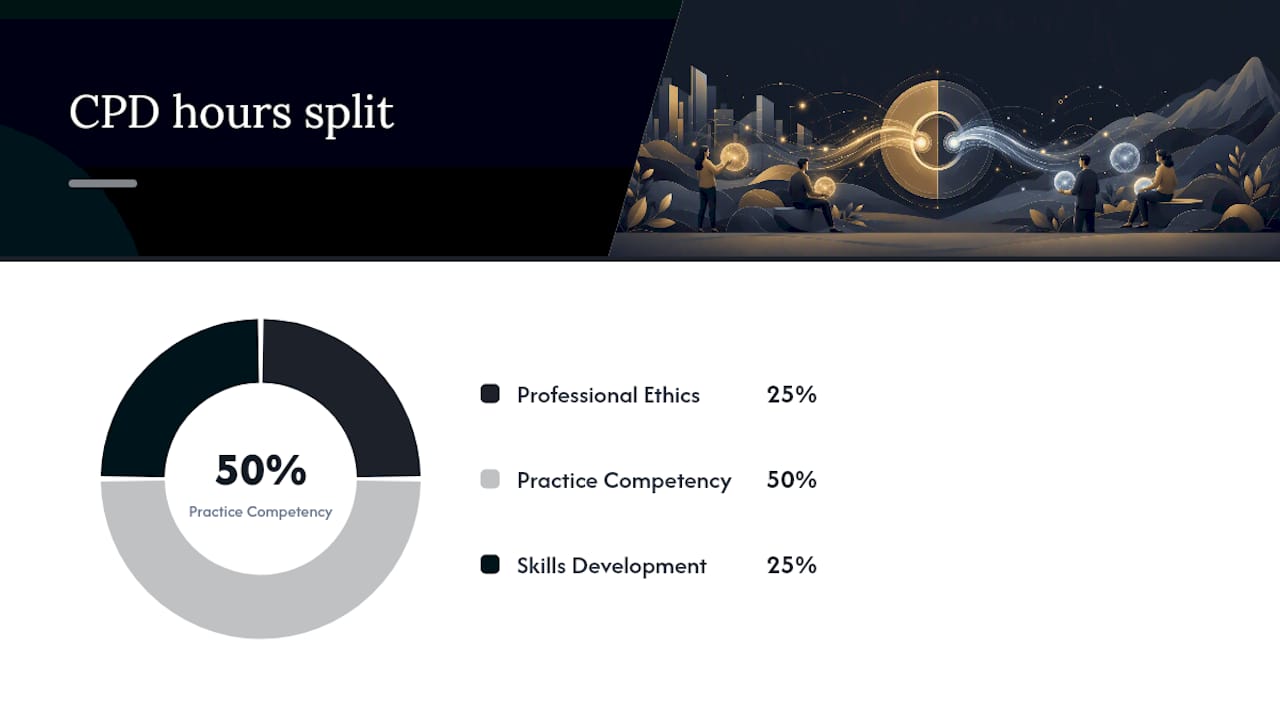
Hit 16 CPD hours | Split across 4 hours PE, 8 hours PC, and 4 hours SDL, with KEO approval required for SDL credits. |
Plan for the 2027 cycle | The three-year licensing cycle and Currency Requirement mean tracking transactions now, not later. |
Get structured support | Myeracareer’s onboarding and Sales+ app help agents track CPD and transactions ahead of renewal. |
Table of Contents
Preparing for CEA License Renewal Before ACEAS Opens
The agents who sail through renewal aren’t the ones who move fast in November. They’re the ones who did the boring work in August and September. Waiting until the window opens to discover a CPD shortfall or a lapsed CNCC is how otherwise compliant RESs end up in the “pending” pile past January 1.
Here’s what to knock out before ACEAS submissions open:
Update your ACEAS “Individual” profile. Check your contact details, employment status, and any name or address changes. Your EA’s corporate details in ACEAS need to be current too, since mismatches between your profile and your EA’s record trigger manual review.
Verify your CPD hours. Log into the CPD portal and confirm you’ve cleared the 16-hour minimum for the cycle. If any hours came from Skills-based Development Learning (SDL) activities, make sure your Key Executive Officer (KEO) has actually approved them. Unapproved SDL credits don’t count, no matter how many workshops you attended.
Confirm CPF and GIRO readiness. If you’re on GIRO for fee deduction, check the linked bank account has sufficient funds and hasn’t lapsed. CPF Medisave contribution records get checked as part of eligibility.
Foreign RESs, get your CNCC early. This document can take weeks to obtain depending on your home country’s processing times, so start in August, not November.
Talk to your EA or KEO about the internal sign-off sequence. Every agency has its own internal review step before submissions go to CEA. Find out what your EA expects from you and when.
Pro Tip: Set a personal deadline of October 15, not November 30. That gives you a six-week buffer if CEA flags a document or your EA’s own licence renewal hits a snag.
How Does the ACEAS Renewal Process Work Step by Step?
The Advanced CEA Estate Agencies System (ACEAS) is where every renewal application lives, and the sequence matters more than most RESs realize.
Your EA must submit and have its own EA licence renewal accepted in ACEAS before any RES registration under that agency can move forward. RESs who attempt to submit before their EA has cleared this step commonly trigger administrative rejections or unexplained delays, since the system checks for a valid, renewed EA licence before processing individual applications.
Once your EA has cleared its renewal, you initiate your own “Individual” renewal in ACEAS and complete a short renewal survey covering your current employment, CPD status, and any disclosures CEA requires.
If you’re switching EAs during the renewal period, that transfer needs to be finalized and reflected in ACEAS before your renewal can proceed under the new agency. Trying to renew mid-transfer is a common source of confusion and delay.
Invoices for renewal fees generate on a fixed schedule, typically Monday, Wednesday, and Friday. If you’re paying by GIRO, the deduction follows a few working days after invoice generation, not instantly.
Once approved, your renewed status appears on the CEA Public Register, which is the reference point clients, employers, and other agencies use to confirm you’re licensed. You’ll also get status emails at each stage, from “application received” through “approved” or a request for additional documents.
Expect the full cycle, from submission to Public Register update, to run two to three weeks for a clean application, per CEA’s guidance. Applications missing documents routinely take longer, and CEA is explicit that late, incomplete submissions may not clear by January 1.
What Are the CPD Requirements for License Renewal?
The 2026 CPD framework sets a 16-hour minimum per cycle for every RES, KEO, and practising director or partner. That’s not 16 hours of whatever training is convenient. CEA splits it into three categories: 4 hours of Professional Ethics (PE), 8 hours of Practice Competency (PC), and 4 hours of Skills-based Development Learning (SDL).
Check the split, not just the total. Sixteen hours of ethics training doesn’t satisfy the PC requirement. Each category needs its own minimum met.
New RESs get a break in their first cycle. If you’ve just entered the industry, CEA typically exempts you from the full CPD requirement for your first cycle, though you should confirm your exact exemption status through the CPD portal rather than assume.
Lapsed registrations reset the clock differently. If your registration lapsed and you’re returning, check with CEA or your EA on which cycle’s requirement applies to you, since it isn’t always the current year’s default.
Verify everything in the CPD portal before you submit. Log your hours, confirm KEO approval status on SDL activities, and print or save a confirmation screen. If a KEO hasn’t signed off on an SDL course, it won’t count toward your 16 hours no matter how legitimate the course was.
Fall short, and your renewal application stalls. In some cases, CEA offers a refresher exam or, for more serious shortfalls, requires re-taking portions of the RES exam. Neither is where you want to be in late November. Our guide to CPD requirements breaks down exactly which activities count for PE, PC, and SDL if you’re still building your hours.
Pro Tip: Don’t wait for December to check your CPD balance. Log in every quarter. A four-hour SDL gap discovered in September is an easy fix; discovered in November, it’s a genuine problem.
How Much Does CEA License Renewal Cost?
Renewal fees are modest compared to the cost of a lapsed license, but the timing details trip people up more than the amounts.
Registration fee: S$280 for RES registration renewal, due each cycle.
Application fee: S$60, charged every alternate renewal rather than every year, which catches some RESs off guard when they expect it annually.
EA licence fees: vary by agency size and structure, and are billed separately to the EA rather than to individual RESs.
Invoice timing: invoices generate on a fixed schedule, and GIRO deductions typically take two to three working days to clear after the invoice is issued.
“Pending fee payment” status: this appears when your invoice has generated but payment hasn’t cleared yet, either because GIRO hasn’t processed or a manual payment hasn’t been logged. It resolves once the payment clears, so don’t panic, but don’t ignore it either.
If you’re an EA, purchase your Professional Indemnity Insurance early enough that coverage runs cleanly from January 1 to December 31 of the renewal year. The number of RESs covered under your PII policy should match your headcount as of your purchase date, since a mismatch here is a documentation problem CEA will flag.
Where Do You Find Renewal Forms and Track Applications in ACEAS?
Most ACEAS confusion comes down to not knowing where to look, not the system being genuinely broken.
The “Renew” button sits on your ACEAS dashboard under Individual profile if you’re an RES, or under Corporate profile if you’re managing an EA’s licence.
“Active Applications” shows every submission currently in process, along with a unique application ID for each. Keep that ID handy when you contact CEA, since referencing it speeds up any support query considerably compared to describing your issue from scratch.
The most common errors are profile mismatches (your details don’t match your EA’s corporate record) and missing supporting documents (a CNCC that expired, a CPD confirmation that wasn’t uploaded). Both usually trigger a status email specifying exactly what’s missing.
If your application sits beyond the typical two to three week window with no update, that’s your signal to escalate. Reference your application ID directly when you reach out rather than starting a fresh inquiry.
Pro Tip: Screenshot your ACEAS confirmation page the moment you submit. If a dispute arises over submission timing, especially close to the 30 November recommendation, that timestamp is your evidence.
What Is the CEA Three-Year Licensing Cycle and Currency Requirement?
Starting January 1, 2027, CEA moves from annual renewal to a three-year licensing and registration cycle, with the first cycle running from 2027 to 2029. If you’re renewing mid-year or joining partway through the industry, CEA will detail proration rules as the transition approaches, but the core shift is straightforward: your license, once renewed under the new system, stays valid for three years instead of one.
That extended validity comes with a new condition. CEA is introducing a Currency Requirement: property agents must complete a minimum number of transactions over the three-year period, or pass a refresher exam, to qualify for renewal, according to CNA’s reporting on the policy.
Annual fee collection continues even though validity spans three years, so don’t assume you’ll only pay once every three years.
The application fee, currently charged every alternate renewal, will likely shift cadence under the new cycle. Confirm the updated schedule as CEA finalizes details.
Recognized transaction types and exact minimums are still being finalized, so agents with low transaction volume should start planning now, either by increasing activity or preparing for the refresher exam.
If your deal flow has been thin, this is the moment to look at your pipeline honestly. Our sales pipeline tracking guide walks through documenting transactions in a way that holds up when CEA asks for proof against the Currency Requirement.
Final Checklist Before You Submit Your CEA License Renewal
Run through this before you hit submit, not after CEA sends back a query.
CPD credits confirmed, including KEO approval on any SDL hours.
GIRO account funded and confirmed active if you’re using it for fee payment.
EA licence renewal status verified as accepted in ACEAS, since your RES renewal can’t process until it clears.
CNCC or residence documentation current if you’re a foreign RES. A document more than a few months old can trigger a request for a fresh copy.
EA switch fully approved in ACEAS if you’re changing agencies this cycle, not just submitted or pending.
Application ID saved so you can escalate quickly if processing runs past the typical two to three week window.
Pro Tip: Tell your clients and any co-broke partners that your renewal is in progress, especially if it’s cutting close to December. A brief heads-up avoids awkward questions about your license status mid-transaction.
Miss the deadline entirely, and the consequence isn’t a fine. It’s an inability to legally practice as an RES or operate as an EA from January 1 until CEA approves your late application, which can mean turning away clients or halting active deals mid-negotiation.
Turning Renewal Requirements Into Career Planning
Compliance deadlines are also useful checkpoints. Treat your CPD hours and, soon, your transaction minimums as milestones worth tracking monthly, not annual scrambles. Agents who monitor their pipeline year-round rarely feel the Currency Requirement as a threat.

How Myeracareer Supports Agents Through CEA License Renewal
Renewal compliance gets easier when you’re not managing it alone, and that’s the gap Myeracareer fills for agents affiliated with ERA. Where a solo RES has to track CPD hours, CNCC timing, and ACEAS status manually, our onboarding and mentorship structure builds those checkpoints into your regular training cadence, so renewal season isn’t a scramble.

New agents get structured RES exam preparation and onboarding support that maps directly onto CEA’s licensing prerequisites, so your first CPD cycle starts on solid footing rather than a scramble to catch up. Our Sales+ app also gives you a running record of transactions, which matters directly for the incoming Currency Requirement once the three-year cycle takes effect in 2027. Experienced agents switching teams get support navigating the EA transfer process in ACEAS, so a mid cycle switch doesn’t jeopardize your renewal timeline. If you’re evaluating a move or just starting out, visit our New Agents page to see how our training and mentoring framework can take the renewal guesswork off your plate before the next exercise opens.
Where to Verify Official CEA License Renewal Details
Confirm specifics directly through CEA’s RES renewal page, the CPD framework page, and the official RES renewal guide PDF.
Frequently Asked Questions
When does the CEA license renewal window open each year? The renewal exercise typically opens in October. CEA recommends submitting by November 30 to allow enough processing time before the January 1 deadline.
Can I submit my RES renewal before my EA renews its license? No. ACEAS requires your estate agency’s EA licence renewal to be submitted and accepted before any RES registration renewal under that agency can be processed.
What happens if I miss the CEA renewal deadline? You risk not being approved before January 1, which means you cannot legally conduct estate agency work until CEA processes your late application, a gap that can disrupt active deals and client relationships.
How many CPD hours do I need for renewal? The current framework requires 16 hours per cycle, split into 4 hours of Professional Ethics, 8 hours of Practice Competency, and 4 hours of Skills-based Development Learning.
What is the Currency Requirement CEA is introducing? Starting with the three-year cycle in 2027, agents must complete a minimum number of transactions over three years, or pass a refresher exam, to remain eligible for renewal.
How long does CEA take to process a renewal application? Complete applications typically take two to three weeks. Incomplete submissions missing documents or CPD proof usually take longer and carry higher risk of missing the January 1 deadline.
Sources
Renewal of salesperson registration | Council for Estate Agencies
Recommended
Comments