
Agent Income Singapore: What Aspiring Agents Should Expect


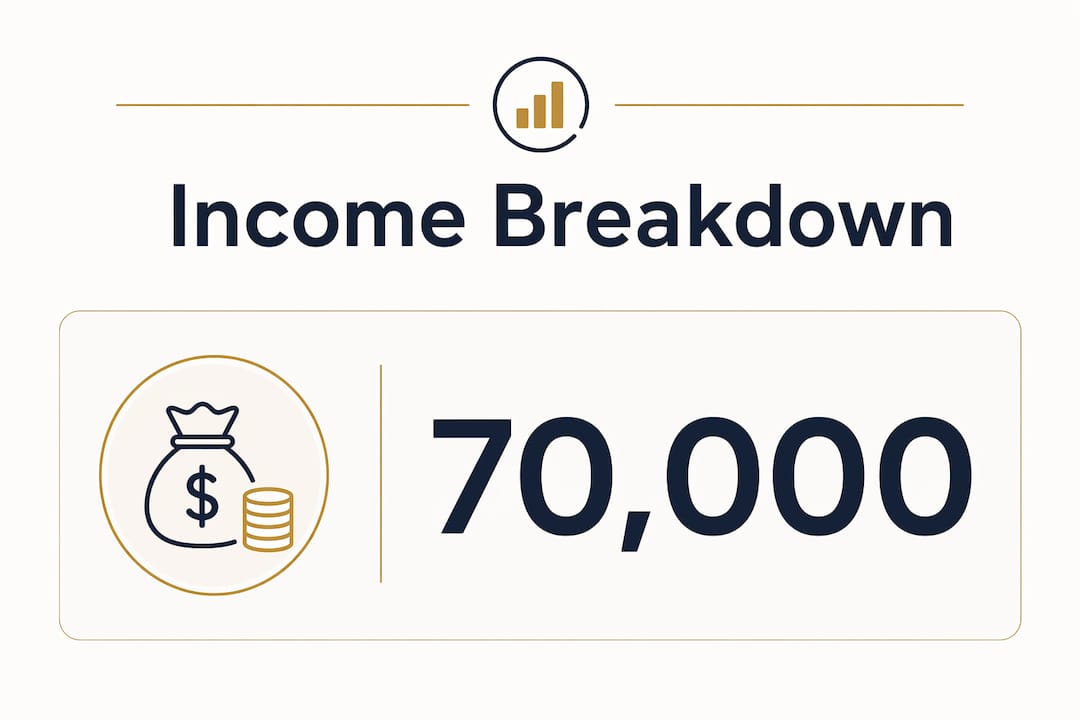
The industry estimate for gross per-capita income among Singapore real estate salespersons (RES) sits at approximately S$70,000. That figure, however, is gross before agency cuts, portal fees, MediSave contributions, and tax. Your realistic take-home is meaningfully lower, and understanding that gap before you sign with any agency is the first step toward building a sustainable career.
Commissions are paid to the licensed agency first; the agency then disburses your share after deducting the agreed split. For IRAS purposes, you are self-employed, and commission income is taxable. The good news: IRAS permits a Fixed Expense Deduction Ratio (FEDR) of 25% of gross income for commission-based agents, which simplifies your tax calculation considerably.
Worked example (illustrative assumptions):
Gross commission income: S$70,000
Agency cut (~20%): S$14,000
Sub-total after agency cut: S$56,000
FEDR deduction (25% of S$70,000): S$17,500 off taxable income
Estimated portal/marketing spend: S$5,000–S$10,000
MediSave contribution reminder: self-employed persons contribute to MediSave annually based on net trade income
Illustrative net take-home: roughly S$40,000–S$46,000
These assumptions change with your agency split, deal volume, and how aggressively you invest in listings.
Pro Tip: Track every operating cost from day one. Portal fees, transport, and marketing add up faster than most new agents anticipate, and accurate records let you apply FEDR correctly at tax time.

Key next actions: verify your agency’s commission split before joining, budget for listing fees, confirm FEDR eligibility with IRAS, and speak with a recruiter like Donny Lee at ERA for a realistic income projection.
Table of Contents
How agent income in Singapore is structured through commissions
What actually erodes your gross: costs, splits, and tax treatment
Concrete strategies to stabilize and grow your commission income
Tax, CPF/MediSave, and regulatory obligations for Singapore agents
How ERA’s training and support structure changes your income trajectory
Market cycles and economic factors that shift agent earnings
Working hours, lifestyle trade-offs, and long-term career paths
How agent income in Singapore is structured through commissions
Commission rates in Singapore are benchmarks, not legally fixed figures. COA/CEA market practice generally suggests seller-side commissions around a few percent for HDB resale and private resale, while buyer-side commissions are often lower for HDB resale. Rental commissions are commonly expressed as months’ rent, with the exact split depending on lease duration and whether both parties have agents.
For new launches, developers typically pay agent commissions of 2–5%, so buyers pay nothing directly. That structure makes developer launches an attractive income channel for agents who build strong developer relationships.
Key commission mechanics to know:
Co-broke splits divide the total commission between buyer-side and seller-side agents, reducing each agent’s gross take.
Large transactions often see negotiated rates below benchmark; confirm whether quoted figures are GST-inclusive (9% applies where the agency is GST-registered).
A rental deal on a S$3,000/month unit yields roughly S$3,000 gross commission. A resale HDB at S$500,000 at 2% yields S$10,000. The quantum difference explains why most agents pursue a mix of both.
What actually erodes your gross: costs, splits, and tax treatment
The agency cut commonly approximates 20% of gross commission, though high performers often negotiate better terms over time. Beyond that, operating costs are the variable most new agents underestimate.
Agency split: ~20% of gross, deducted before disbursement
Portal and listing fees: top agents spend at least S$50,000 annually on paid boosts; new agents should budget S$5,000–S$10,000 in year one
Marketing and photography: professional listing assets are a recurring cost
Transport: client viewings and site visits accumulate quickly
FEDR tax deduction: IRAS allows 25% of gross income as a deemed expense deduction, reducing your taxable base without requiring itemized receipts
Pro Tip: File your income tax using FEDR in your first year rather than itemizing. Unless your actual documented expenses exceed 25% of gross, FEDR is almost always the simpler and more favorable method.
Career-stage income differences and realistic timelines
Income polarization in Singapore’s real estate market is pronounced. Example agency data shows new agents under 35 with at least one transaction averaging around S$30,000, while the top 5% within the same agency earned approximately S$170,000.
What drives that gap:
Deal flow consistency: top producers close transactions every 4–6 weeks; new agents may go months between deals
Lead source quality: referral networks and repeat clients generate lower-cost, higher-conversion leads
Agency-provided training and tools: structured onboarding materially shortens time-to-first-deal
A realistic timeline: most new agents close their first deal within 3–6 months. A steady pipeline typically takes 12–24 months to build. Top-producer status, with consistent six-figure gross income, generally requires three or more years of disciplined lead generation and client retention. Donny Lee, ERA’s senior recruiter, notes that agents who join mentor-led teams tend to compress that timeline because they inherit structured lead workflows from day one.
Concrete strategies to stabilize and grow your commission income
The feast-and-famine cycle is inherent to commission-based work, but it is manageable with the right systems in place.
Set a monthly lead target in month one. Commit to a specific number of new contacts per week, whether through portal inquiries, owner referrals, or developer launches. A defined target creates accountability before income pressure sets in.
Budget for one paid portal channel. An agent who invests S$800–S$1,200/month in a paid listing boost on a major portal typically generates enough inquiry volume to sustain one to two transactions per quarter, smoothing monthly cashflow.
Join a mentor-led team. Team models reduce per-lead acquisition cost because lead workflows are shared. ERA’s team structure, for example, pairs new agents with experienced leaders who provide both deal flow and negotiation coaching.
Diversify by property type. Rental listings generate faster, smaller commissions that bridge gaps between larger resale deals. Corporate relocation partnerships add a recurring B2B channel.
Build a repeat-client system. A simple CRM or even a spreadsheet tracking past clients, their lease renewal dates, and upgrade timelines can generate referral income with near-zero acquisition cost.
Tax, CPF/MediSave, and regulatory obligations for Singapore agents
As a self-employed RES, your tax and contribution obligations differ from salaried employment in several important ways.
IRAS self-employed treatment: all commission income is declared as trade income. IRAS pre-fills income data from commission-paying intermediaries from YA 2024 onward, but you remain responsible for verifying accuracy and declaring all sources.
FEDR: the 25% fixed deduction applies to gross commission income and covers deemed business expenses. Confirm eligibility at IRAS.
MediSave: self-employed persons with net trade income above a threshold must contribute to MediSave annually. Factor this into your net-income planning.
Commission flow: per CEA rules, commissions are paid to the licensed agency, which then disburses your share. Clarify your agency’s settlement cycle before you join.
GST check: if your agency is GST-registered, the 9% GST applies to the commission billed. Confirm whether client-facing quotes are GST-inclusive or exclusive.
This article is general information, not tax or legal advice. Verify your specific obligations with IRAS or a qualified tax professional.
How ERA’s training and support structure changes your income trajectory
Agency choice is one of the highest-leverage decisions a new or switching agent makes. The right agency shortens time-to-first-deal, reduces operating overhead, and provides tools that compound over a career.
ERA addresses the core pain points new agents face:
Pipeline generation: ERA’s Sales+ app provides AI-powered lead management and digital workflows that reduce the manual overhead of prospecting.
Structured coaching: ERA’s training programs cover negotiation, listing strategy, and client management, giving new agents a framework rather than a blank slate.
Team leadership pathways: experienced agents can transition into team leader roles, adding override income to their commission base and building long-term earning stability.
Marketing support: ERA’s brand presence provides credibility that independent agents spend years building on their own.
Donny Lee’s recruiter perspective, grounded in years of onboarding both new and experienced agents, is that the agents who grow fastest are those who treat agency resources as infrastructure, not just a badge. That means using the CRM, attending coaching sessions, and leveraging the team’s collective lead flow rather than operating as a solo practitioner within a large firm.

Whether you are preparing for the RES exam or considering a switch from your current agency, Myeracareer connects you with ERA’s full recruitment and onboarding support and offers an external primer on real estate licensing and practical steps to obtain a license. Explore your options at Career With ERA and speak directly with Donny Lee’s team about what your first year can realistically look like.
Market cycles and economic factors that shift agent earnings
Singapore’s property market moves in cycles driven by government policy, developer activity, and global capital flows. Cooling measures, such as Additional Buyer’s Stamp Duty (ABSD) adjustments, directly affect transaction volume and therefore agent income.
Price cycles: rising property values increase commission amounts per deal even at the same percentage rate; falling volumes reduce deal frequency.
Developer new-launch activity: a strong launch pipeline creates high-commission opportunities with developer-paid fees. Quiet launch periods push agents toward resale and rental.
Policy shifts: ABSD changes, loan-to-value adjustments, and HDB eligibility rules all alter buyer behavior and the mix of transaction types available.
Diversification response: when sales volume slows, agents who have built rental and corporate relocation pipelines maintain steadier income than those focused exclusively on resale.
Working hours, lifestyle trade-offs, and long-term career paths
Real estate in Singapore demands flexible hours, with evenings and weekends typically the busiest client-facing periods. Most active agents spend roughly 40–60 hours per week across viewings, admin, marketing, and lead follow-up, though the split varies significantly by career stage.
Long-term progression options beyond frontline sales:
Team leader: earn override commissions on your team’s transactions while maintaining your own portfolio; ERA’s team leader pathway provides a structured transition.
Specialist roles: luxury residential, commercial, or industrial segments command higher per-deal commissions and attract a narrower, more relationship-driven client base.
Training and mentorship: experienced agents who move into coaching roles often combine a base income with performance bonuses tied to team output.
Track your lead sources and conversion rates through your first 12 months. That data becomes the evidence base for deciding which progression path fits your strengths and income goals.
Key Takeaways
Singapore RES gross income averages around S$70,000, but realistic net take-home after agency cuts, operating costs, and tax typically lands between S$40,000 and S$46,000 for a median performer.
Point | Details |
Gross vs. net gap | Agency cuts (~20%), portal fees, and tax reduce S$70,000 gross to roughly S$40,000–S$46,000 net. |
FEDR tax advantage | IRAS allows a 25% fixed expense deduction on gross commission income for self-employed agents. |
Income polarization | New agents under 35 average ~S$30,000; the top 5% in the same agency can reach ~S$170,000. |
Agency choice matters | Structured onboarding, AI tools like Sales+, and mentor-led teams shorten time-to-first-deal. |
Diversify to stabilize | Mixing rental, resale, and new-launch deals smooths the feast-and-famine income cycle. |
Recommended
Comments